
Stepping out of the courthouse, the midday sun struck me with a bright, cruel indifference. Traffic flowed steadily down the avenue. Pedestrians hurried along the sidewalks holding coffees and briefcases. The world simply kept spinning, entirely oblivious to the fact that my reality had been irrevocably shattered and rebuilt in the span of twenty-four hours.
“You did the right thing, Michael,” Amanda said, stepping up beside me and giving my hand a firm, grounding squeeze. “David is finally going to get the help he so desperately needs.”
“And after?” I asked, my voice barely a hollow rasp. “What happens when he eventually gets out? How can I ever look at him and feel safe again? How can he possibly forgive me for not seeing that he was suffocating in plain sight?”
Dr. Mercer, who had walked out of the heavy glass doors just behind us, stepped into the conversation. “Schizophrenia is a highly treatable disease, Mr. Stafford. With the proper regimen of antipsychotic medication and intense cognitive therapy, many patients manage to lead fully functional, rewarding lives. It will not be an easy road. There will be setbacks. But there is genuine hope.”
“I want to visit the hospital,” I told the doctor, my resolve hardening. “I need to see exactly where he will be staying. I want to meet the medical staff who will be treating him.”
“I can easily arrange that,” Dr. Mercer offered with a warm, reassuring nod. “I know the facility’s director personally. In fact, if you will allow it, I would very much like to stay directly involved in David’s ongoing case. I feel a heavy, professional responsibility for having lost contact with him when he needed me most.”
I nodded, a profound sense of gratitude washing over me. At the very least, my boy would have dedicated, familiar professionals fighting in his corner.
Jessica approached us, her eyes red-rimmed but dry. “I have to get to the airport. I have a direct flight back to Chicago this afternoon. But I will be in touch, Michael. And if you need absolutely anything, please call me.”
“Thank you for flying out here, Jessica,” I said, pulling her into a brief embrace. “Your testimony today was the linchpin. We couldn’t have done this without you.”
As I watched her hail a passing cab, I thought about the vast oceans of my son’s life that I had been completely blind to. Bruce Patterson, the insurance executive, walked over to say his own goodbyes. He handed me a thick, embossed business card.
“Please, keep me informed of David’s medical progress,” Patterson said sincerely. “He was an exceptionally talented employee. When he is truly better and stabilized, we could sit down and discuss the possibilities of him returning to the corporate world.”
It was a remarkably kind gesture, though I knew in my bones that David’s road to recovery would be measured in years, not months.
Amanda drove me back to my quiet neighborhood. We barely exchanged a single word during the entire commute. We didn’t need to. The comfortable silence and her steady presence were all the comfort my battered nerves required. When her car finally idled in my driveway, I sat and stared through the windshield at my house. The humble structure that had been my absolute refuge for decades now looked alien, forever tainted by the phantom memories of what had almost transpired in the dark.
“Do you want me to stay with you tonight?” Amanda offered softly, putting the car in park.
“No, I will be fine,” I assured her, mustering a tired smile. “I just need to be alone for a little bit. I need to process all of this.”
She studied my face with deep concern. “Are you absolutely sure, Michael? It has been a brutally intense day.”
“I’m sure. I’ll call you tomorrow, I promise.”
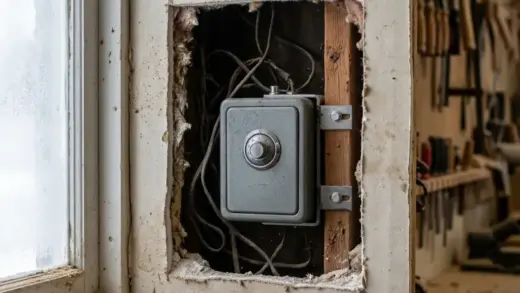
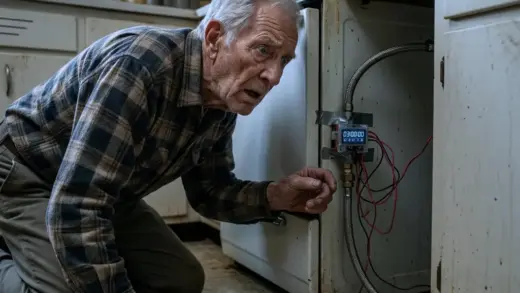
When her taillights disappeared down the street, I unlocked my front door and stepped inside. I walked slowly through the narrow hallway, stepping into the kitchen. I stopped dead in the center of the linoleum floor, staring at the empty space behind the stove where the lethal timing device had been hidden.
I looked up at the digital clock on the microwave. It glowed bright green: 9:13 PM.
I stood there like a statue. For a terrifying, instinctual moment, my body braced itself, fully expecting my cell phone to ring at exactly nine-fifteen, just as it had every single night for the past three months. But the minute turned, and the kitchen remained cloaked in heavy silence. I knew it wouldn’t ring again for a very long time.
I poured myself a tall glass of tap water and sank into my favorite worn armchair in the living room. Resting on the center of the coffee table was a framed photograph of David at ten years old. He was grinning with a mouthful of crooked teeth, proudly holding up his very first middle-school math award. He was the brilliant, quiet boy I had raised with my own two hands. He was the promising young man in whom I had invested every ounce of my hope.
Now, that same boy was locked behind the reinforced doors of a psychiatric ward, actively fighting invisible demons that I couldn’t even begin to comprehend. Even though he had meticulously planned to end my life, as I sat alone in the dark, I couldn’t shake the devastating conviction that I had profoundly failed him.
Six grueling months have passed since David was formally admitted to the state psychiatric hospital. It has been a half-year defined by weekly visitations, fleeting moments of profound progress, sudden emotional setbacks, and a constant, swinging pendulum between hope and despair.
The very first time the medical staff permitted me to see him was three weeks after the judge’s ruling. I was led into a sterile, brightly lit visitation room. When they brought David in, my breath caught in my throat. He had lost a significant amount of weight, his cheekbones jutting sharply against his pale skin. The heavy regimen of introductory antipsychotics kept him in an almost permanent, lethargic fog. He barely seemed to register my presence when I sat down across the plastic table. His dark eyes, which used to be so sharp and intensely observant, were dull and glassy, staring right through my chest as if I were made of smoke.
“Hi, son,” I said gently, folding my hands on the table. A burly orderly stood quietly in the far corner of the room, his posture watchful but respectful.
David blinked, his eyelids moving with agonizing slowness. “Dad,” he murmured. It wasn’t framed as a question, nor did it carry the warmth of a greeting. It was just a flat, mechanical acknowledgement that I existed in the room.
“How are you feeling? Are the nurses treating you well?”
He looked down at his own hands. They were resting motionless against the plastic grain of the table—hands that were usually plagued by a restless, nervous energy. “The medicine makes me feel weird,” he finally articulated, his words slightly slurred. “It feels like I’m watching everything happen from very far away. Like I’m underwater.”
“Dr. Mercer says it’s entirely temporary,” I reassured him. “Your brain chemistry is just adjusting to the new baseline.”
I mentioned the doctor because Dr. Mercer had kept his word. He visited the state facility twice a week to personally oversee David’s psychiatric file, and he called me every Friday to provide a detailed, clinical update on his progress.
David offered a slow, distracted nod. Then, without any warning, his brow furrowed, and he asked a question that chilled my blood.
“Why am I in here?”
The inquiry left me speechless for a terrible moment. “You… you don’t remember?”
“I only remember broken fragments,” he whispered, struggling visibly to connect the scattered, shattered pieces of his own mind. “Things that don’t make any logical sense. I remember calling your cell phone every single night. I remember unlocking your back door when you were sleeping. But I don’t understand why I did those things.”
“You were incredibly sick, son. You still are,” I answered, measuring every single word. “But you are getting better every day.”
“What happened to me?” His eyes suddenly locked onto mine, desperately hunting for an anchor in his own mental fog.
How could I possibly explain the horrific truth? How could I tell a fragile, broken man that he had engineered a flawless plot to murder his own father for a massive insurance payout? Dr. Mercer had explicitly warned me during our phone calls that it would be highly counterproductive to overwhelm David with the violent specifics of his psychosis all at once. He needed a safe runway to process his fractured reality.
“Your mind was playing terrible tricks on you,” I answered carefully, keeping my voice soft and steady. “It actively made you believe terrifying things that simply weren’t true. You acted based entirely on those false, paranoid beliefs.”
“Did I…” His voice cracked, the raw emotion finally breaking through the pharmaceutical haze. “Did I hurt you?”
“No, son,” I said firmly, reaching out to tap my knuckles against his. “You didn’t get to hurt me.”
Technically, it was the absolute truth. The lethal timer was never allowed to strike zero.
David looked down at his lap, his shoulders dropping in a profound display of shame. “There are times I can still remember the voices. They sounded so real. But they weren’t, were they?”
“No, David. They were never real. That was just your illness speaking to you.”
That initial visit was brief, heavily monitored, and agonizingly painful. My son was sitting physically across from me, but a massive part of his soul was still wandering lost inside the dark labyrinth of his own mind. As the orderly gently tapped his shoulder to signal the end of the hour, David reached out and grabbed the sleeve of my flannel shirt.
“Will you come back?” he asked in a remarkably small, fragile voice. It was the exact same tone he had used when he was a frightened child, terrified that I was going to leave him alone in the dark.
“Every single week,” I promised, placing my hand over his. “I will be right here every week, without fail.”
I kept that promise. Over the next six months, the visitations wildly fluctuated. Some Sunday afternoons were thoroughly disheartening. David would be deeply withdrawn, thoroughly confused, and trapped inside the echoing chamber of his own thoughts. Other weekends, the heavy clouds would momentarily part, and I would catch beautiful, fleeting glimpses of the brilliant man I knew. He would ask coherent, engaged questions about the transmission jobs I was doing at the auto shop. He would laugh at old anecdotes from his high school years. During month four, the staff allowed us to bring in a wooden chessboard, and we fell right back into the familiar, quiet rhythm of our past.
Behind the scenes, Dr. Mercer meticulously adjusted David’s prescriptions, endlessly searching for the delicate, razor-thin balance between silencing the terrifying hallucinations and allowing his core personality to shine through. He explained to me that treating severe schizophrenia is a grueling marathon of trial and error, and that every patient’s neurological response is entirely unique.
While David fought his battles in the ward, I quietly went to work rebuilding my own life. Amanda sent a trusted contractor to my house to install a state-of-the-art security system. I didn’t authorize it because I was terrified of my son returning; I did it because I desperately needed to reclaim the baseline sense of safety that had been stolen from me. I returned to my part-time hours at the garage, finding deep comfort in the predictable mechanics of engines and oil. My younger colleagues noticed that I was significantly quieter, far more introspective than before, but they respectfully gave me my space. Helen, my wonderful neighbor, became my daily anchor. She brought over fresh casseroles, insisted we sit down for dinner at her table at least three times a week, and possessed the incredible grace to never once mention the gas line unless I explicitly brought it up first.
Today is a monumental day. After exactly six months of institutionalization, David is scheduled for his first formal medical evaluation before the county judge. The psychiatric board will officially present their progress report, and the court will determine if he is to continue under the exact same strict regimen, or if the parameters of his hospitalization can be safely modified.
I arrive at the massive courthouse an hour early. It is the exact same building where the initial, terrifying hearing took place, but this morning, the towering marble columns feel significantly less intimidating. Perhaps it is because I finally understand the legal machinery at work, or maybe it’s because I now comprehend exactly what is at stake for my family.
Amanda is already waiting for me near the metal detectors. She has been an immovable rock throughout this entire grueling ordeal, serving not just as my legal counsel, but as a fiercely loyal friend.
“Good morning, Michael,” she greets me, offering a warm, reassuring hug. “How are the nerves today?”
“Restless,” I admit, smoothing the lapels of my suit. “Have you had a chance to review the final medical report?”
“Yes, Dr. Mercer emailed it to my office yesterday evening,” she says, her tone deeply encouraging. “It is overwhelmingly positive. David has responded remarkably well to the adjusted pharmaceutical treatment. However, the medical board is officially recommending that he remain actively hospitalized for at least another twelve months.”
“Another full year?” The news lands with a heavy thud in my chest. A naive part of my heart had been silently praying that the judge might let him come home with me today. Yet, the logical, grounded part of my brain knows that such a transition would be dangerously premature.
“It is exactly what is best for him, Michael,” Amanda says gently, reading the disappointment on my face. “He absolutely needs to be completely, chemically stable before he even attempts to navigate the pressures of the outside world.”
We pass through security and make our way down the polished corridor. Dr. Mercer is already waiting near the heavy oak doors of the courtroom, quietly reviewing a stack of clinical documents with David’s appointed public defender.
“Mr. Stafford,” the doctor says, looking up with a polite smile. “Are we ready for today?”
“As ready as I will ever be,” I reply, shaking his hand. “How is David doing this morning?”
“He is doing relatively well,” Dr. Mercer nods. “He fully comprehends the legal gravity of this evaluation hearing. We slightly reduced his morning dosage of sedatives so he can be more cognitively present for the judge’s questions, but as a result, he might still seem a tiny bit disoriented.”
“Is there any way I can see him before the judge takes the bench?”
The doctor checks his silver wristwatch. “We have about fifteen minutes before they call the docket. He is sitting in a private holding room with an orderly. Let me see what I can arrange.”
While Dr. Mercer heads off to speak with the bailiffs, I notice a familiar figure walking purposefully down the hallway. It is Jessica. She flew in on the red-eye from Chicago specifically for this evaluation. We greet each other with a long, sincere embrace. Despite her painful history with my son, she has maintained regular contact with me and has even flown out to visit David in the ward twice over the last few months.
“How is he looking lately?” she asks, her voice laced with genuine concern.
“Every single week, he gets a little bit better,” I tell her, a proud smile touching my lips. “He is much more anchored to reality. Last month, we even managed to play three full games of chess. It felt exactly like it did when he was a teenager.”
Jessica smiles, a look of profound nostalgia crossing her features. “He was absolutely ruthless at that game. Did he manage to beat you?”
“Three games in a row,” I chuckle. For a beautiful, fleeting moment, the two of us simply smile, sharing a memory of the brilliant, healthy David we both used to know.
Dr. Mercer reappears from a side door and signals for me to follow him. He leads me down a narrow, restricted hallway to a small, windowless interview room. David is sitting at a metal table, accompanied by a kind-looking medical orderly.
My son looks radically better than he did on that terrifying first visit six months ago. He has regained a healthy amount of weight, his shoulders are squared, and his posture is upright. And his eyes—though still carrying the faint, unmistakable glaze of heavy medication—lock onto me with immediate, sharp recognition.
“Dad!” he says, his chair scraping loudly against the tile as he stands up to embrace me.
I wrap my arms around him, holding him tightly against my chest. I can feel the solid, returning strength in his back. He feels vastly healthier than the fragile ghost I hugged half a year ago.
“You have exactly five minutes, gentlemen,” Dr. Mercer advises quietly, stepping back into the hallway to afford us a sliver of privacy.
“Are you nervous about getting up in front of the judge?” I ask, taking the metal chair across from him.
“A little bit.” David rubs his palms forcefully against his thighs—a classic, nervous tic I recognize from his childhood. “Dr. Mercer told me that he is going to officially recommend I stay in the ward for another year.”
“It is what is best for your long-term recovery, son.”
He nods slowly, his gaze dropping to the table. “I know it is. I know I am nowhere near ready to leave. I still… I still hear the whispers sometimes. They aren’t screaming like they used to, but they are still there, hiding in the background.”
His raw honesty brings a lump to my throat. It is a monumental, incredible leap of progress for him to actively recognize his auditory hallucinations for exactly what they are—symptoms of a disease, rather than absolute reality.
“With time, and with the right clinical treatment, those whispers will fade to nothing,” I assure him, squeezing his arm. I am merely parroting Dr. Mercer’s medical optimism, but I deliver the words with absolute conviction.
“Dad,” David says, suddenly lowering his voice to a hushed, urgent register. “There is something I really need to ask you. Something that has been tearing me apart at night.”
“Tell me, son.”
“Did I…” He swallows hard, his eyes rapidly filling with hot tears. “Did I actually try to kill you?”
The terrible moment I have been dreading for twenty-four weeks has finally arrived. For half a year, we have carefully danced around the violent specifics of his psychosis, focusing entirely on the mechanics of his recovery rather than the horror of his crime.
“Yes,” I answer softly. There is absolutely no point in protecting him with a lie; his recovery depends entirely on the truth. “But… it wasn’t you, David. It was your severe illness pulling the strings. It was acting through you.”
David squeezes his eyes shut, the tears finally spilling over his lashes and tracking down his cheeks. “I remember it now. Not every single detail, but enough to terrify me. I remember wiring that digital timer to the back of your stove. I remember making those phone calls every night to make sure you were sitting in the house alone. It all felt so perfectly, flawlessly logical at the time.”
“Why, son?” I ask, needing to finally understand the darkest corner of the nightmare. “What exactly were the voices telling you to do?”
He takes a deep, shuddering breath before answering. “They told me that you were in imminent, lethal danger. They convinced me that people were actively watching your every move through the neighbors, through the phones. The voices screamed at me that the absolute only way to save you from being tortured was to make your death look like a tragic, painless accident. They said if I did that, the people hunting you would finally lose interest and leave your soul alone.”
I sit back in my chair, entirely stunned by the deeply twisted, tragic logic of severe psychosis. For David, trapped inside the suffocating walls of his sick mind, he was not committing a cold-blooded murder for financial gain. He truly believed he was performing an act of ultimate, agonizing mercy. He thought he was executing a rescue mission.
“And the life insurance policy?” I press gently, needing to snap the final piece of the puzzle into place.
“That was to secure my escape afterward,” he explains, wiping his wet face with the sleeve of his uniform. “The voices promised me that the moment I saved you, the people watching the house would instantly come for my life. I desperately needed the payout money to vanish. To buy a new identity and run somewhere they could never track me.”
He shakes his head, an expression of profound disgust crossing his features. “It all sounds so incredibly absurd to me now. It sounds so entirely sick.”
“That realization is the absolute core of the recovery process, David. Recognizing the utter irrationality of those paranoid thoughts,” I say, leaning forward.
The heavy door swings open, and the orderly politely informs us that the judge has taken the bench. We both stand up. Before we turn toward the door, David reaches out and grabs my forearm with a desperate grip.
“Will you ever be able to truly forgive me?” he asks, his voice trembling with raw fear.
“I already forgave you the very night they took you away, son,” I tell him, looking him dead in the eyes. “The only person you need to forgive now is yourself.”
The evaluation hearing is significantly shorter and far less theatrical than the initial criminal trial. The presiding judge, the same stern man with the remarkably kind eyes, listens intently as Dr. Mercer walks the court through the comprehensive medical reports. He details the confirmed diagnosis of paranoid schizophrenia, notes the positive neurological response to the antipsychotic regimen, and praises David’s active participation in cognitive therapy.
David sits quietly beside his public defender. When the judge addresses him directly, my son answers with remarkable clarity and profound respect. He openly acknowledges the severe reality of his mental illness. He explicitly understands the medical necessity of his continued hospitalization, and he expresses a deep, unscripted remorse for his terrifying actions—though he carefully clarifies for the official record that he was acting under the absolute influence of complex delusions he believed to be matters of life and death.
When the bailiff calls me to the podium to offer my victim impact statement, I look directly at the judge. I express my absolute, unconditional support for the psychiatric board’s recommendations. However, I formally request that the court consider authorizing supervised, temporary medical leave in the near future, allowing David the opportunity to begin slowly and safely reintegrating into society.
The judge listens thoughtfully to all parties, reviews his notes, and decisively issues his ruling.
David will remain in the secure custody of the state hospital for an additional, mandatory period of twelve months, subject to thorough quarterly evaluations. However, the judge authorizes a highly flexible, expanded visitation schedule, and officially grants the medical board the authority to approve supervised day-outings after the ninth month, provided the attending psychiatrists deem it clinically safe and appropriate.
It is a remarkably sensible, beautifully balanced legal ruling. It is certainly not the immediate homecoming I might have foolishly dreamt of six months ago, but it is undeniably exactly what my son needs to survive.
After the gavel falls, the bailiffs allow us a few precious minutes with David before he is transported back to the medical facility. Jessica approaches him with a timid, warm smile.
“Hi, David,” she says softly. “You look really good.”
My son looks at his ex-wife with a complex mix of genuine surprise and profound gratitude. “Jessica. I honestly didn’t expect to see you sitting in the gallery today.”
“I just wanted to see with my own eyes how you were doing,” she replies. “I am so incredibly glad to see that you are finding your way back.”
Their brief exchange is incredibly significant. There are deep, jagged wounds from their marriage that may never fully close, but standing in that courtroom, it is clear that the bitter resentment has finally burned away.
When the orderly taps his watch to signal their departure, David pulls me into a crushing hug.
“Thank you for not giving up on me, Dad,” he whispers fiercely into my shoulder.
“I never would, David,” I answer, my throat tight with emotion. “I am your father. I will be standing right here for as long as it takes.”
I watch him walk away down the corridor, flanked by the guards. He is walking taller, his shoulders back, infinitely more present in reality than he was six months prior. We have a massive, grueling mountain left to climb, but we have finally established a foothold.
Amanda, Jessica, and I walk out of the courthouse together. The afternoon sun bathes the bustling Cleveland streets, a beautiful reminder that the world continues to turn, offering fresh starts to those willing to fight for them.
“Do you both want to grab a coffee?” Jessica suggests, checking her phone. “I have a couple of hours to kill before my flight boards.”
I gladly accept the invitation. As we stroll toward a nearby cafe, Amanda casually asks about my long-term plans for the property.
“Have you given any more thought to putting the house on the market? After everything that went down in that kitchen?”
I shake my head firmly. “It is my home, Amanda. I am absolutely not going to let a disease take my sanctuary away from me, too.” I pause, glancing up at the clear blue sky. “Besides, I want David to have a familiar, safe place to come back to when he is finally ready.”
“You are a remarkably good father, Michael,” Jessica says, her voice thick with emotion. “You always have been.”
Her kind words wrap around me like a warm blanket, temporarily silencing the lingering, nagging voice in my head that constantly wonders if I could have prevented this entire nightmare had I just paid closer attention to his silent suffering.
We sit at a small corner table in the coffee shop for an hour. Jessica enthusiastically shares stories about her new marketing job in Chicago. Amanda vents playfully about her nightmare corporate clients. And I just sit back and listen, profoundly grateful for this tiny, beautiful slice of mundane normalcy after surviving a category-five hurricane.
After we put Jessica in a cab bound for the airport, Amanda drives me back to the outskirts of town. As we cruise past the local auto shop, she glances over at me.
“Are you clocking back in tomorrow morning?” she asks.
“Yes,” I nod. “The familiar routine keeps my hands busy and my mind grounded.”
“I am really glad to hear that. Life has to keep moving forward, Michael.”
When she drops me off, I find Helen sitting patiently on my front porch swing, holding a steaming, foil-wrapped casserole dish on her lap.
“How did the hearing go?” she asks, standing up with a worried, motherly expression.
“It went very well,” I tell her, taking the heavy dish from her hands. “David is going to stay in treatment for another twelve months. But Helen, he is truly getting better. The medication is working.”
“Thank the good Lord,” she sighs, immediately crossing herself. “I have been praying the rosary for that boy every single night.”
I thank her profusely for the dinner and her unwavering, quiet support. When she heads back across the lawn, I unlock my door and step inside.
The house is quiet, but it is no longer suffocating. I no longer feel that icy spike of primal fear walking past the shadows in the hallway. I have officially reclaimed my home. I have reclaimed my life.
I set the casserole on the counter and look at the microwave clock. It reads exactly 9:15 PM.
It is the precise minute of the ominous, terrifying phone call that will never echo through this house again. Purely out of muscle memory, I pull my cell phone from my pocket, fully aware that the screen will remain dark.
But tonight, I am the one who initiates the call.
I dial the direct administrative number for the state psychiatric hospital. After providing my credentials and security passcode, the operator transfers my line to the nurses’ station operating inside David’s secure unit.
“Good evening, I just wanted to check in and see how my son is doing after a very long day in court,” I explain to the attending nurse who answers the phone.
“He is doing wonderfully, Mr. Stafford,” she replies warmly. “He is perfectly calm. He ate his entire dinner, and he is currently sitting on his bed reading a paperback novel. Would you like me to relay a message to him for tomorrow morning?”
“Yes, please,” I say, a genuine smile breaking across my face. “Please tell him that I will call him on Friday afternoon to confirm our visitation schedule for the weekend.” I hesitate for a split second, letting the weight of the moment settle over me. “And please, tell him that his father is incredibly proud of the progress he is making.”
When the call ends, I walk into the living room and look down at the coffee table. The photograph of the ten-year-old boy holding his math award is still sitting exactly where I left it. But tonight, I reach into my jacket pocket and pull out a brand new, silver-framed picture.
I place it gently right next to the old one. It is a Polaroid snapshot that one of the ward nurses took just three weeks ago. It shows David and me sitting across from each other, deeply engrossed in a game of wooden chess. David is looking directly at the camera. His smile is admittedly shy, a little bit guarded, but it is undeniably real. It is the very first genuine expression of joy I have seen on his face in over three years.
That night, as I pull the heavy quilts up over my chest, I spend a long time reflecting on the quiet, terrifying, and extraordinary nature of a father’s love. I think about how it is built to withstand the most devastating, violent storms imaginable. I think about how it stubbornly, foolishly persists, even when the entire world dictates that all hope is lost.
My only son meticulously planned to murder me. He was driven by the screaming, relentless demons of a diseased, fractured mind. And yet, sitting here in the dark, the absolute only thing I want in this world is to watch him heal. I want to see him rebuild his mind and become himself again. Not for my own peace or comfort, but entirely for his.
When I close my eyes, I do not double-check the heavy deadbolts on the doors. I do not peer nervously into the dark corners of the bedroom. For the first time in nearly a year, I simply drift off to sleep in total peace, secure in the knowledge that both David and I have finally found our footing on the right path. It will be a brutal, exhausting climb, littered with unforeseen challenges, but it is a path paved with genuine hope.
The lie I told my son on that quiet Tuesday evening had undoubtedly saved my life. But the brutal, agonizing truth we uncovered in the dark aftermath of that lie is what ultimately saved my boy. And in the end, looking back at the wreckage we survived, that is all a father can truly ask for.










Comments are closed.