
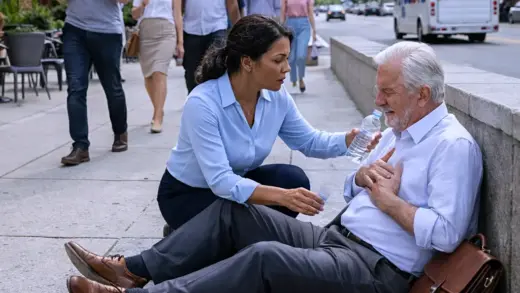
I have known Patrick for thirty-one years. This was the man who stood crying in the sterile hospital room and held one of Diane’s hands while her monitor flatlined. This was the man who stood up at the pulpit and delivered a beautiful, shattered eulogy at her funeral.
He is also the reason I finally understand why my wife hid the notebook from me.
She had suspected her own brother. She had written it down in the brown cardboard pages, a single, devastatingly careful line tucked near the very end of her notes.
“I think Patrick told someone about our accounts,” she had written. “I can’t prove it yet, and I can’t tell Graham. He and Patrick are close. It would destroy him before I know for certain.”
Even while her body was failing, she had been throwing herself on the grenade to protect my heart.
Patrick was formally charged as an accessory after the fact. He quickly pled guilty to a significantly reduced charge in exchange for his full cooperation with the prosecution’s case against Clifton. I haven’t spoken a single word to him since the day the handcuffs went on.
I don’t know if I ever will. I don’t say that with any burning heat or malice. I’ve had enough empty days to let the blistering anger burn itself out into cold ash. I say it because I genuinely do not know how to stand in the same room with the person who helped dig the grave of the woman I loved more than breathing. I have simply stopped trying to force an answer that I am not spiritually ready for.
Clifton Rowe was ultimately convicted on the heavy fraud charges. But the criminal negligence charge was eventually stayed by the Crown. It wasn’t dropped because they lacked evidence, but because of a maddening procedural issue regarding the strict chain of custody for the toxicology samples. Margaret sat me down and explained the legal technicality at length. I understood the mechanics of it in theory, but my grieving mind could never truly absorb it emotionally.
He served only fourteen months behind bars.
The massive civil suit, which Margaret aggressively pursued through a separate court, resulted in a devastating financial settlement. It returned almost all of our stolen money, plus a very significant amount in punitive damages. I took a large portion of that settlement check and donated it directly to the cardiology unit at Health Sciences North. It felt like the only right thing to do with the money.
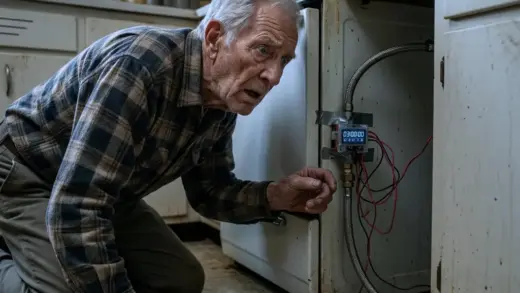
I still live out in the same house on the snowy edge of Sudbury. Terry Kowalski eventually came back and finished rewiring the electrical system in the outbuilding.
Lately, I have started using the space again. It is a slow, incredibly tentative process, exactly the way you start navigating a room that belonged to a ghost you desperately miss. You stand there in the sawdust, trying to decide whether using their favorite tools is a way of honoring their memory or a painful way of finally letting them go.
I have been trying to make a birdhouse out of some scrap birch. It is not a very good birdhouse. The joints are a bit crooked, and the roof doesn’t sit quite flush. But I know Diane would have patiently guided my hands and helped me build a better one. And somehow, right there in the clumsy act of building a bad one, I feel her quiet presence much more vividly than I do anywhere else in the world.
The sealed envelope she left me inside that wall, those two handwritten pages, sit on my nightstand. I have read them so many times the creases are starting to wear thin. There is one specific line near the bottom of the second page that pulls me back constantly.
“You always trusted people more easily than I did,” she wrote, the ink slightly faded. “I love that about you. Don’t stop trusting people. Just be willing to look carefully at the ones who are very close.”
I have spent countless hours staring out the kitchen window, thinking about the profound gravity of that advice. I think about the vast canyon between ugly suspicion and quiet discernment. I think about how loving someone, truly pouring your soul into them, does not require you to put on a blindfold and refuse to see their flaws.
I think about the terrifying reality that the people most capable of utterly destroying us are almost always the ones we have already decided, well in advance, to trust without question.
Diane had thirty-one years of solid evidence proving that I was a good man. But in those terrible final months, she also possessed the incredibly hard-won clarity to realize that someone sitting at our own dinner table was a monster. She held both of those conflicting realities in her mind at the exact same time. She held them with immense grief, with boundless love, and without a single drop of bitterness.
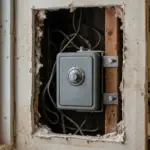
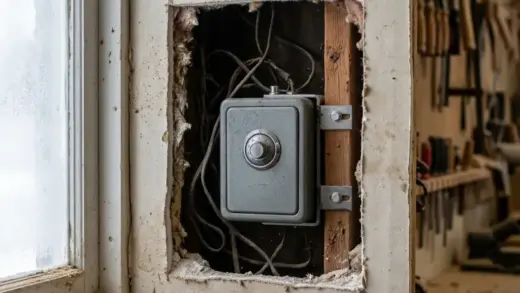
She documented every single twisted lie. She packed it all into a metal box, screwed it into the bones of our house, and simply hoped that one day I would pull it from the dark. She was entirely right to trust that I would find the truth.
If there is a single thing I want the world to take away from this—from the whole long, agonizing, terrible arc of it—it is a lesson that I believe my wife understood far better than anyone else I have ever known.
Love is absolutely not the same thing as blind trust. Caring for the people in your life means staying completely clear-eyed about the company they keep. And when something deep in your gut feels profoundly wrong, the most loving action you can possibly take is not to shield your family from that dark feeling. The most loving thing you can do is aggressively document it, drag it into the light, take it dead seriously, and refuse to let anyone dismiss your reality.
She did every bit of that. She did it entirely alone.
She was sick. She was exhausted. She was undoubtedly frightened. And she did it anyway, simply because she loved me enough to ensure I wouldn’t live a lie after she was put in the ground.
I think about her every single day. I think about that little cardboard notebook hidden behind the drywall. Most of all, I think about a brilliant woman with wood dust on her heavy apron, her wire-rimmed reading glasses pushed up into her hair, sitting alone at her craft desk in the dead of night. I picture her writing those careful, meticulous notes about things she was too terrified to speak out loud, making absolutely sure the evidence was locked away safely, making sure her husband would eventually find it.
She was the most precise person I have ever known. But above all else, she was the bravest.





Comments are closed.