
I was idling my car in the parking lot of St. Andrew’s Presbyterian Church in Sudbury, the heater fighting a losing battle against the February chill, when my phone vibrated deep in my heavy wool coat. It was a local area code buzzing across the screen, but not a number I recognized. My thumb hovered over the ignore button. I almost let it ring through to voicemail.
I look back on that fleeting hesitation all the time now. I wish I had let it ring. Not because the voice on the other end delivered bad news in the traditional sense, but because of the absolute avalanche of truth that followed the moment I answered.
“Is this Graham?” the voice asked.
It was a man’s voice, rough around the edges and slightly breathless, sounding like he had just jogged up a flight of stairs.
“It is,” I replied.
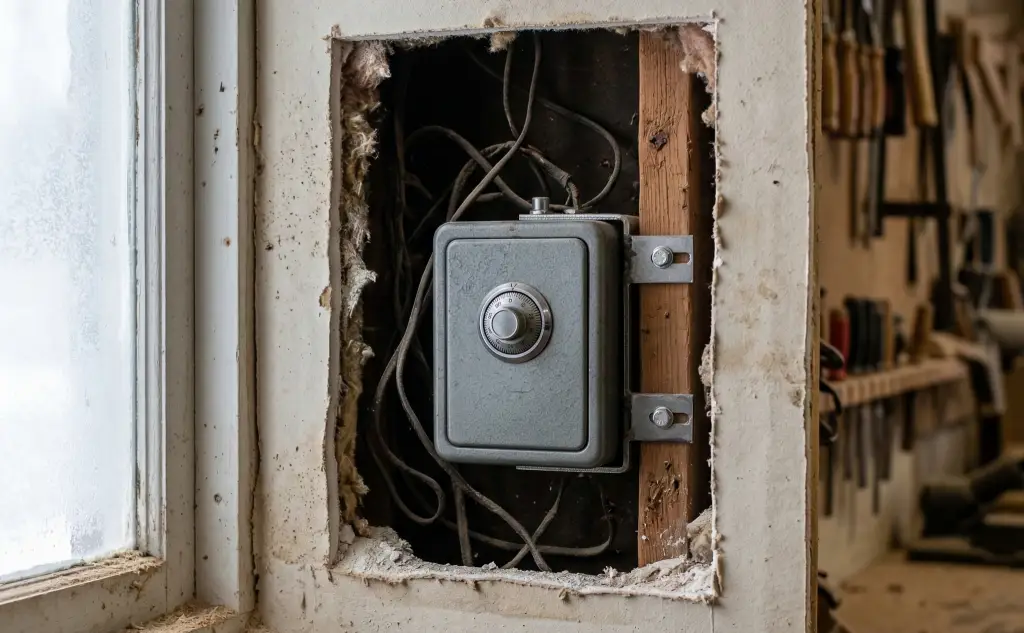
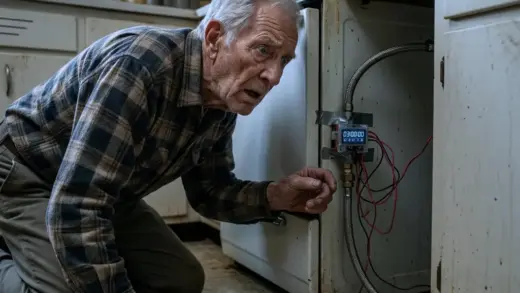
“My name is Terry Kowalski. I’m the electrician you hired to rewire the workshop out back. I am incredibly sorry to bother you on a Sunday morning, sir. But look, I need you to come home. Right now, if you can.”
He paused, and the dead air on the line felt suddenly heavy.
“But please,” Terry added, his tone dropping an octave. “Don’t bring anyone else with you. Come alone.”
I remember staring out through the frost-fringed windshield. The morning sunlight was resting on the snow-covered asphalt of the church lot. Everything out there was white, impossibly still, and profoundly ordinary. And then, with the click of the ending call, the world shifted on its axis.
My name is Graham Whitfield. I am sixty-one years old. I live in a quiet, two-story house on the fringes of Sudbury, Ontario, perched on a half-acre lot that eventually surrenders to a thick treeline of native spruce and birch.
My wife, Diane, had passed away exactly fourteen months before that strange phone call. She had only been fifty-seven. The emergency room doctors had blamed her heart. A sudden cardiac event, they called it. They delivered the clinical terminology with a practiced gentleness, as if naming the catastrophe with precise medical words could somehow cushion the blow of losing her.
We had been married for thirty-one years.
After she was gone, a kind of paralysis had set in. I couldn’t bring myself to change the geography of our shared life. Her wire-rimmed reading glasses still sat exactly where she had left them on the nightstand. Her worn-out gardening clogs still waited patiently on the mat by the back door.










Comments are closed.